

With fall approaching, many of us are shifting into new schedules and routines. For some, that means returning to roles where we are managing both writing and caregiving. For others, it may mean adjusting to new caregiving responsibilities, or, as is often the case, learning to navigate both.
When I think about previous fall seasons, I remember how much my caregiving roles shaped my writing routines. For several years, I supported my parents while living several states away. Sometimes that meant traveling to be in person for appointments, or to allow my brother to have a break, and other times it meant helping virtually. I became quite the taskmaster when it came to organizing their care online. Later, when we moved closer to family, my caregiving responsibilities shifted again as I provided more support in person and had to learn how to balance this with my path to tenure. If you’ve been a caregiver, you know this: caregiving routines are constantly changing.
Amidst those changes, here are three practices that helped me sustain my writing. I’ve also used these practices to coach and support other writers navigating writing and caregiving. I share these with the hope that they may be of support to others.
1. Keep project lists
If you already have a system to manage your writing, wonderful. If not, this might be the season to start one. Writing projects usually unfold in stages such as research, drafting, feedback, revision, and submission. It can be difficult to keep track when caregiving pulls your attention elsewhere.
Your system does not need to be elaborate. A Google Doc with a running checklist, post-it notes on a whiteboard, or even a simple notebook can work. You want a system that helps you to track where you are and what needs to get done. What matters is creating a place where your projects “live” so you can step back into them after caregiving interruptions.
2. Reflect on your rhythms and writing process
Ask yourself: What do I need to write?
In a previous post, I wrote about the importance of knowing your writing process, what helps, what hinders, and how it shifts over time. Caregiving almost always changes your writing rhythm, whether that is the time of day you can write, how long your sessions last, or what conditions you need for focus.
If you have never mapped or paused to reflect on your process before, this might be a good time. Reflection can reveal what supports are most useful to you and what obstacles you have navigated before. You also don’t have to do this alone. Working with a coach can help you to think carefully about your writing process, tasks, and energy.
3. Practice self-compassion and seek community
When I first began helping care for my mother, who had ALS, I felt incredibly alone. Few people around me were talking openly about the intersections of caregiving, higher education, writing, and grief. The loneliness made everything harder.
Community made the difference. Whether through local caregiver networks or writing groups, connecting with others helped me to recognize that I was not as alone as I thought. Often, it was through talking with others that I learned of resources and support that I didn’t know existed.
Self-compassion is a practice I discovered much later in my writing and caregiving journey. Looking back, I realize I may have practiced elements of it without knowing the name, but I didn’t formally learn about it until years later. What I appreciate about practicing self-compassion is the reminder to treat ourselves with the same kindness we so readily extend to others.
When I apply self-compassion practices to writing, I think about the advice I often share with others who are balancing both writing and caregiving, which is words of encouragement about softening expectations and remembering the importance of caring for themselves. It’s easy to offer that reminder to others, but much harder to consistently practice it for myself.
A note here about self-care. While everyone says “practice self-care,” I want to acknowledge that it looks different for each of us, and it is rarely simple. Sometimes self-care is a warm bath and tea. Sometimes it might be an afternoon spent in the library. Other times, it could look like curating a playlist that carries you through the day. Allow yourself the time to figure out what it means for you.
Writing Prompts for this Season
Here are two writing prompts to explore what you may need for this season of writing and caregiving.

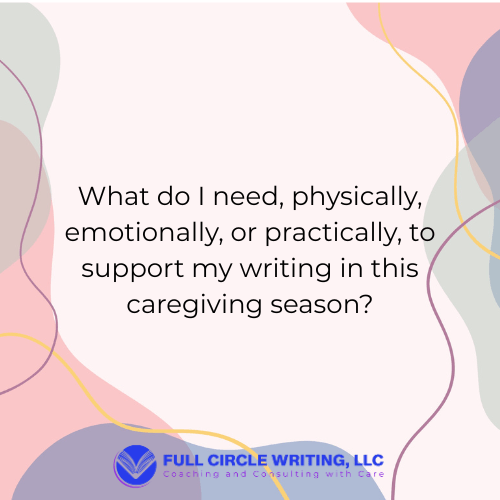
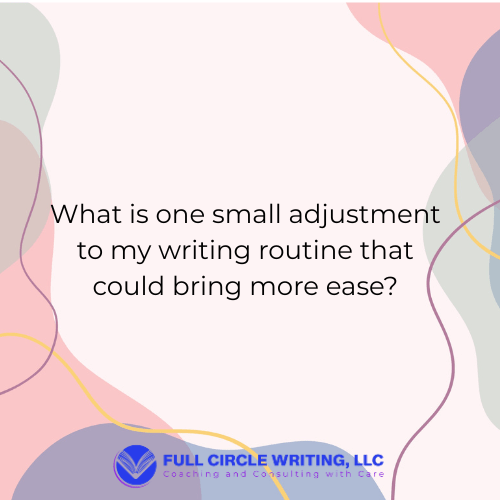
Of course, sometimes we also have to hit pause on our writing projects to care for ourselves during intense seasons. There are ways to call for a pause that honor the work and your need for a break.
As we move into fall, I will share more about my writing group, Between the Lines, starting in October. This is a group for writers who are caregivers. If that resonates with you, stay tuned for details in upcoming posts. In the meantime, here are a few additional resources and a practice that I have found helpful:
- Dr. Katherine Lee’s Rise with Clarity podcast — Dr. Lee is a career coach for women of color in higher education, and she hosts a wonderful podcast. This particular episode is part of a three-part series on supporting caregivers in higher ed. While her focus is higher education, the insights she shares are meaningful for caregivers in many contexts. (There are several episodes in her podcast series that are connected to caregiving.)
- Dr. Kristin Neff on Why Caregivers Need Self-Compassion — Dr. Neff is a leading researcher on self-compassion. In this short practice, she describes what it means to offer yourself “on the job” care, reminding us that we don’t have to wait for a break or a quiet moment to be kind to ourselves.
- Art journaling as reflective practice — If you are feeling like words are too much, try giving yourself permission to express on the page in other ways. Grab a piece of paper and some magazines, old books, or scraps, and create a simple collage. Use one of the writing prompts above as your starting point, but instead of writing, let images, colors, and textures do the talking. Often what emerges visually can help you process feelings or ideas that words alone cannot capture.
Stay tuned for more on the upcoming writing group, workshops, and offerings designed to support your writing alongside the demands of everyday life. Coaching can also be a wonderful resource for your writing. Consultations are always no-cost, and I have availability for fall. If you’d like to connect, please don’t hesitate to reach out.
 Full Circle Writing, LLC
Leave a comment